Property Rights Lawyer in Oxnard, CA
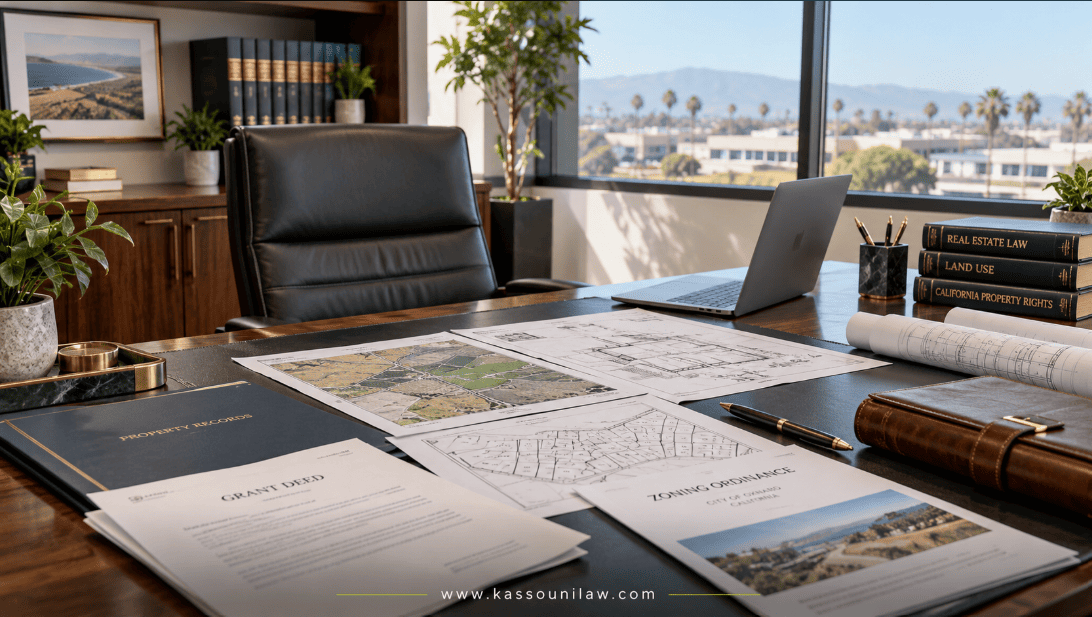 A survey shows that a neighbor’s new wall sits past the recorded property line. A road used for access is suddenly blocked. A planned addition runs into a zoning designation or a coastal permit condition. Each situation raises different legal questions about property ownership, access, and land use.
Anyone searching for a property rights lawyer in Oxnard, CA, should start by identifying the nature of the dispute. Kassouni Law represents private parties in California property rights disputes, including boundary, easement, trespass, land-use, and takings matters. Learn more about the firm’s broader property rights practice.
The legal options depend on the facts, the parties involved, and the rights at issue. A dispute with a neighbor may require a different approach from a challenge to a city decision or a claim involving government action.
Property Rights Disputes Oxnard Owners May Face
Not every problem below is a valid legal claim. The options depend on the facts, the documents, and the law that applies.
Property Line and Boundary Disputes
Boundary disputes arise from fences, walls, landscaping, driveways, and structures that may sit on the wrong side of a line.
A fence does not conclusively fix a legal boundary. Neither does an online parcel map. The deed’s legal description, recorded maps, a licensed surveyor’s work, and title records carry more weight. Doctrines such as agreed boundaries and adverse possession can also change the outcome, so the history of a fence may matter.
An Oxnard property line dispute attorney can compare those records and advise whether a claim exists. The firm’s real estate law practice covers these disputes.
Easement and Property Access Disputes
An easement is a legal right to use another person’s land for a limited purpose, such as access or utilities. Disputes involve a blocked route, a use that exceeds the easement’s scope, or disagreement over who must maintain it. The recorded documents and applicable law control, not what neighbors have assumed. Kassouni Law’s easement law page covers these issues.
Zoning and Land-Use Disputes
A property’s zoning designation sets which uses are allowed and which development standards apply. Permit conditions and discretionary approvals can add further limits. When an owner disagrees with one of these decisions, the dispute is with a government body, not a neighbor. That calls for different tools. Kassouni Law’s land use law page describes this work.
A challenge to a city land-use decision usually has its own administrative appeal path and its own court deadlines. A dispute with a neighbor follows different rules.
Coastal Property and Development Restrictions
Some Oxnard properties fall within the coastal zone. Development there generally needs a coastal development permit under the Coastal Act, in addition to other required approvals. Where a local coastal program is certified, the city issues the permit, and certain decisions can be appealed to the California Coastal Commission.
Concerns can include permit conditions, limits on the use or expansion of a structure, and public access requirements. A condition is not unlawful merely because it limits an owner’s preferred use. Whether a challenge is viable depends on the facts and the law, including the constitutional limits on permit conditions.
For example, in Nollan v. California Coastal Commission (1987) 483 U.S. 825, a Ventura County beachfront permit required a public easement across private land. The Supreme Court held that a condition needs an essential nexus to the government’s legitimate purpose. That ruling does not make coastal conditions invalid as a rule.
Trespass, Nuisance, and Interference With Property Use
Trespass involves unauthorized entry or physical intrusion onto land. A nuisance involves substantial and unreasonable interference with the use and enjoyment of property. Ordinary inconvenience, such as routine noise or an unwelcome view, is generally not enough. The conduct must cross a legal threshold. See Kassouni Law’s trespass law page. When harm is ongoing, a court order may be needed, which the firm’s writs and injunctions page addresses.
Eminent Domain and Inverse Condemnation
In eminent domain, a government entity formally acquires private property for public use. It must pay just compensation, subject to legal requirements. Inverse condemnation is different. The owner seeks compensation for a qualifying taking or damaging of property when no formal proceeding was filed.
A regulation that reduces property value is not automatically a taking. Many are lawful. The question is whether the government action meets the legal test. See the firm’s inverse condemnation page for more.
How Oxnard’s Local Rules Can Affect Property Rights
Oxnard’s rules shape what an owner can build, what a neighbor can build, and what remedy fits. The City of Oxnard publishes zoning resources, including its zoning code (Chapter 16 of the city’s code of ordinances), a zoning map, and an address-based map lookup.
Four points matter most to an owner facing a dispute:
Applicable Zoning Rules
Zoning designations determine permitted uses and development standards. Oxnard also has specific plans, such as the Mandalay Bay and SouthShore plans, that the city says can vary uses and standards from the zoning code. The applicable rules depend on where the parcel sits.
Planning Records and Permit Conditions
The city’s Planning and Environmental Services division offers permit records by address, development project information, and a records request process. Approved plans and attached conditions can show what a neighbor was allowed to build and what an owner must do.
Whether the Property Falls Within the Coastal Zone
The city’s Local Coastal Program includes a Coastal Land Use Plan and a Coastal Zoning Ordinance (Chapter 17). The city lists coastal planning areas including McGrath/Mandalay Beach, Oxnard Shores, Channel Islands, and Ormond Beach, and publishes a post-certification map. Many Oxnard properties are not in the coastal zone, and coastal rules do not apply the same way to every parcel. The city has also reported an ongoing amendment of its program, so owners should confirm which provisions apply.
The Decision or Conduct Being Challenged
A boundary claim, an appeal of a permit condition, and a nuisance claim involve different procedures. Identify the specific decision or conduct at issue before choosing a legal strategy.
Deadlines vary by decision. The city’s planning page states that appeals of certain planning decisions are due within 18 days, or 10 working days in the coastal zone. Appeals of qualifying coastal decisions to the Coastal Commission also run on a short clock. Court challenges to land-use decisions can carry separate limits, such as the 90 days under Government Code section 65009 for many zoning and permit-condition decisions. Owners should confirm the dates for their own decision.
Actions to recover land, determine rights in it, or seek damages for injury to it are generally tried in the county where the property sits. For Oxnard, that is Ventura County. A city contact or permit complaint rarely resolves a private property dispute.
What Should You Do When a Property Rights Dispute Arises?
These steps are general information. They are not prerequisites to every claim, and they should not delay urgent legal action.
- Identify the issue. Decide whether the dispute concerns a boundary, an easement, land use, a neighbor’s conduct, or government action.
- Gather property documents. Collect deeds, title reports, recorded easements, surveys, permits, plans, and written agreements.
- Preserve evidence. Keep dated photographs, correspondence, notices, and records of damage or interference.
- Review decisions and deadlines. If a city or other public body issued a decision, note its date and any appeal or court filing requirements.
- Seek legal advice when necessary. An attorney can assess claims, defenses, remedies, and procedural requirements.
How Can a Property Rights Lawyer Help?
A lawyer’s value lies in analysis and procedure, not in promises. A consultation may cover:
- Reviewing deeds, easements, title records, surveys, permits, and other documents
- Evaluating potential property rights claims and defenses
- Assessing whether the dispute involves private rights, administrative action, or constitutional issues
- Explaining possible remedies, including negotiation, litigation, injunctive relief, or compensation where legally available
- Reviewing procedural requirements and deadlines
- Representing private clients in appropriate negotiations, proceedings, or litigation
Not every dispute belongs in court. No result is guaranteed.
Why Contact Kassouni Law About an Oxnard Property Dispute?
Complex disputes often mix private rights with government decisions. Kassouni Law’s work spans constitutional property rights, land use, real estate, writs and injunctions, and appeals. That range matters when a boundary question, a permit condition, and a deadline all affect the same parcel.
A consultation focuses on practical questions. What right is at issue? What do the records show? Which decision or conduct can be challenged? What deadlines apply? The answers shape the options.
Contact Kassouni Law About an Oxnard Property Dispute
Resolving a property dispute starts with identifying the right at issue and reviewing the facts. Only then can an owner decide whether to negotiate, appeal, or litigate.
Property owners with a potential dispute involving Oxnard property can contact Kassouni Law. The firm represents private parties and does not represent the City of Oxnard, Ventura County, or other government bodies. No result is guaranteed.
Call (877) 770-7379 or use the firm’s contact page. Submitting a contact form does not create an attorney-client relationship.
Frequently Asked Questions
What does a property rights lawyer do for an Oxnard property owner?
A property rights lawyer reviews the documents and facts, identifies any legal claims or defenses, and explains the available remedies and deadlines. The work can involve a neighbor, a city decision, or both.
How do I know if my Oxnard property is in the coastal zone?
Check the city’s Local Coastal Program page and its post-certification map, and confirm with city planning staff. Do not assume an address inside or outside the zone without checking.
Can I challenge an Oxnard zoning or permit decision in court?
Sometimes. A challenge may require an administrative appeal first and a court filing within a short deadline. Whether a claim is viable depends on the decision, the record, and the law.
What should I do if my neighbor’s fence or structure crosses my property line?
Gather the deed, title records, and a survey, and photograph the structure. Avoid removing it yourself. A lawyer can advise whether encroachment, trespass, or another claim applies.
How soon should I contact a lawyer about an Oxnard property dispute?
Promptly, especially when a government decision or an ongoing harm is involved. Appeal and filing deadlines can be short, and delay can limit the options.
The information provided here is for general informational purposes and does not constitute legal advice. Outcomes depend on the facts and the applicable law. Readers should consult a qualified California attorney about their specific situation.